2026-06-18
Automate Airtable with OpenClaw: Gate Bulk Writes Before They Reach a Base
A 40-case Airtable write-admission drill binds token scope, base, table, fields, method, record identity, review, webhooks, and idempotent recovery.
Airtable automation decision memo · static official documentation review · deterministic local fixture · no live base or token
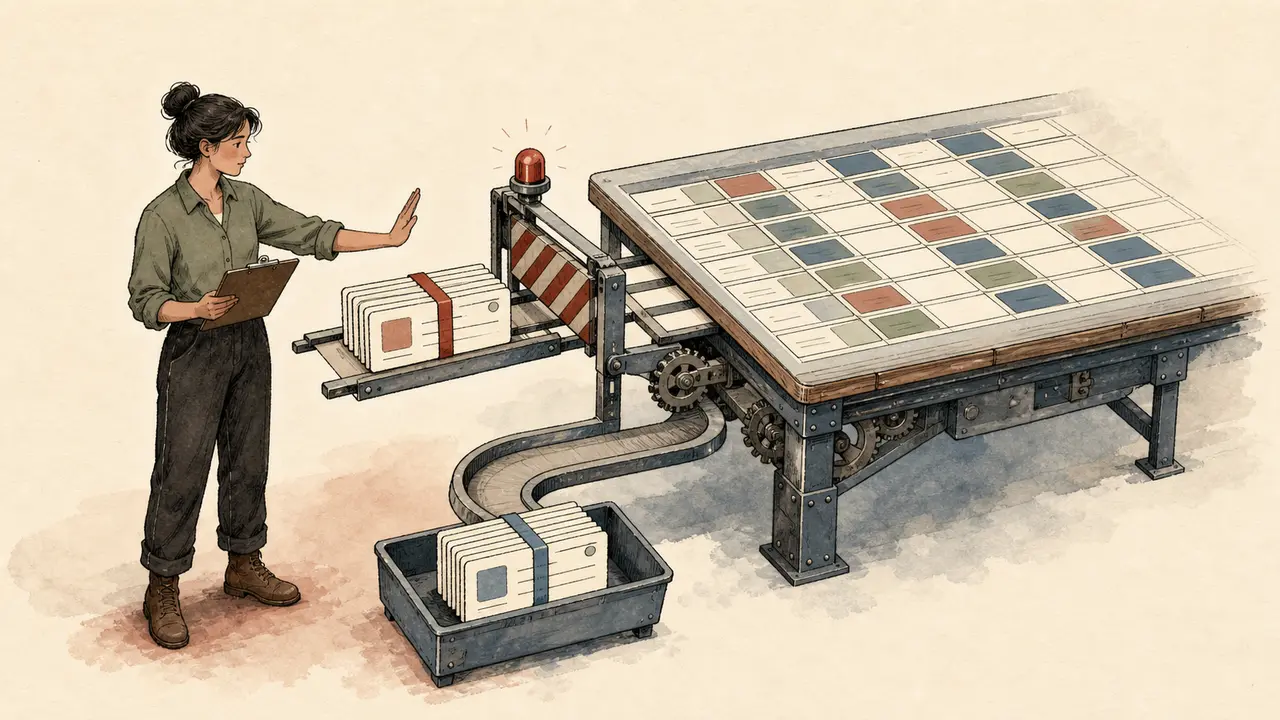
Automate Airtable with OpenClaw only after the write has become a small, inspectable artifact. “Clean up the pipeline base” is a goal. It is not an authorization envelope. A useful envelope says which base and table are in scope, which field IDs may change, whether the operation is a patch or an upsert, which records are affected, what the preview showed, and which exact bytes an operator approved.
That distinction matters because Airtable is forgiving at the UI and exact at the API. A renamed column can leave code pointed at the wrong human label. A PUT can clear omitted cell values. An upsert with a weak merge key can create a new row where an update was intended. A retry after a lost response can repeat a write that already succeeded. The model should not improvise through any of those ambiguities.
A base is not an agent scratchpad
Airtable's personal access tokens can be narrow—one scope against one base—or broad enough to reach many current and future resources. The token still inherits the owner's underlying permissions. That makes the token a platform capability, not workflow authorization. If a token can write a table, every tool call carrying that token needs a smaller contract.
The most dependable shape is a fixed adapter such as airtable.records.patch. It accepts table IDs and field IDs, never a free-form URL. It rejects unknown fields before building an HTTP request. It defaults to read or preview. The credential stays behind the adapter; the model sees a typed operation and a reduced response, not the bearer value.
OpenClaw tool policy can reduce which callable actions the agent sees. Keep the broad HTTP client, shell, and arbitrary browser out of this agent's route when the job is table maintenance. A skill may explain the workflow; it does not turn a generic network or exec tool into an Airtable-specific boundary.
Validation: forty mutations against one write contract
The retained fixture never contacted Airtable. It evaluated synthetic packets against a deterministic decision function. That makes the result reproducible and keeps credentials, customer rows, and production state outside the evidence pack.
| Mutation | Decision | Why the boundary exists |
|---|---|---|
| Approved patch, bound record ID | READY_TO_WRITE | The destination, fields, review digest, and replay key still agree. |
| Eleven records in one JSON batch | BLOCK_BATCH_SIZE | The normal create/update batch contract tops out at ten records. |
| Method changes from PATCH to PUT | BLOCK_DESTRUCTIVE_PUT | Omitted values would change meaning from “leave alone” to “clear.” |
| Upsert uses an unapproved merge field | BLOCK_MERGE_KEY | A convenient label is not necessarily a unique external identity. |
| Webhook transaction skips ahead | HOLD_WEBHOOK_GAP | The consumer must reconcile missing payloads before advancing its cursor. |
| Completed idempotency key repeats | RETURN_CACHED_RECEIPT | A lost response should not become a second mutation. |
| Fields change after approval | BLOCK_REVIEW_BINDING | The approved preview no longer describes the outgoing request. |
The 40 cases covered 32 distinct decisions. Five were write-ready: a normal patch, a bound upsert, a sequential webhook change, a two-record patch, and an upsert carrying an existing Airtable record ID. Read-only, preview, and pending-review packets stayed reversible. Everything else either stopped or waited for missing evidence.
Bind the destination before the values
Use IDs in the machine contract. Airtable accepts table names or table IDs, but its own API reference recommends IDs so a rename does not force an integration change. Apply the same rule to fields. Names are useful in the review UI; IDs belong in the canonical request and its digest.
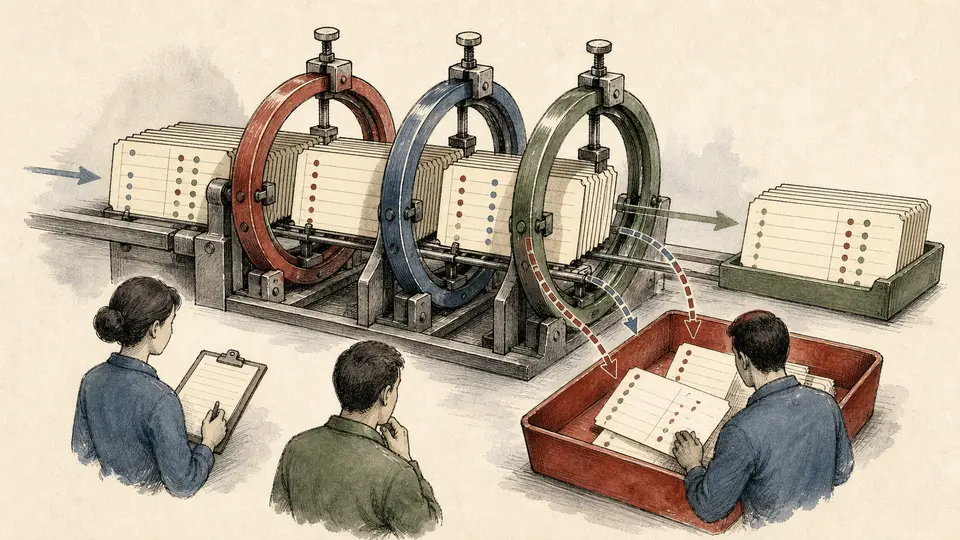
A preview packet should include the base ID, table ID, allowed field IDs, affected record IDs or external keys, old values, proposed values, and any fields intentionally omitted. It should also show the count. “Thirty-seven changes” is materially different from “one correction,” even if both fit the same schema.
{
  "contractVersion": "airtable-write-v1",
  "action": "records.patch",
  "baseId": "app_approved",
  "tableId": "tbl_pipeline",
  "records": [{
    "id": "rec_candidate",
    "fields": { "fld_status": "reviewed" }
  }],
  "allowedFieldIds": ["fld_status"],
  "typecast": false,
  "idempotencyKey": "run:row:revision"
}
Record count alone is not the blast radius. A single record may contain a linked-record field, an attachment, or an automation-triggering status. Mark those fields as sensitive in the adapter and require a higher review class. The packet should say what downstream behavior may fire; it should not assume that “one row” means “one harmless effect.”
PATCH is safer than PUT, but not safe by itself
Airtable's update-multiple-records reference gives the method distinction unusual operational weight. PATCH changes only supplied fields. PUT clears cell values that are not included. A generic “update records” action that can switch between them has two different destructive meanings behind one friendly verb.
The adapter should expose PATCH for ordinary corrections and omit PUT entirely unless a separately reviewed replacement workflow truly needs it. Even a PATCH must still reject fields outside the allowlist, empty field objects, unknown record IDs, and batches over ten. Leave typecasting off by default: Airtable describes it as best-effort conversion, useful in some integrations but deliberately disabled by default for data integrity.
This is also where the old four-workflow framing broke down. “Bulk import,” “cleanup,” and “CRM sync” sound like separate agent jobs, yet all three eventually collapse into the same dangerous point: a set of record mutations with identity, conversion, and replay semantics. One strong write contract is more valuable than four long prompts.
Upsert is an identity decision
performUpsert can reduce calls by finding, creating, and updating in one request. Airtable matches records without an id using one to three fieldsToMergeOn. Zero matches create; one match updates; multiple matches fail. That is efficient only when those fields represent a durable external identity.
Do not let the model choose a merge key from whatever column looks unique today. Approve the field IDs in configuration, verify that computed fields are excluded, require every new record to carry each merge value, and retain a collision report. An email address may change. A display name may be duplicated. A CRM source ID may be stable, but only the owning system can make that promise.
When Airtable record IDs are already known, use them. The API ignores merge fields for records that carry an id; a missing ID then fails instead of silently creating a replacement row. That failure is often preferable to a plausible duplicate.
Rate limits turn retries into state management
Airtable documents five requests per second per base and an additional 50 requests per second for traffic using one user's or service account's personal access tokens. After a rate-limit 429, the documentation says to wait 30 seconds before subsequent requests succeed. Batching supports up to ten records per request, so the first optimization is fewer calls, not faster loops.
The retry layer must distinguish a response that definitively rejected the request from a connection that disappeared after Airtable may have committed it. The former can be retried after policy permits. The latter needs reconciliation: read the targeted records, compare the intended field values, and consult the local idempotency ledger before sending again.
Store a request digest and a state such as prepared, in_progress, complete, or uncertain. A completed key returns its retained receipt. An in-progress or uncertain key does not start a second write. Human review resolves the ambiguity when readback cannot prove the outcome.
Webhook pings wake the worker; they do not contain the change
Airtable webhooks send a small notification containing base and webhook identifiers. The receiver acknowledges it, then requests payloads separately. Airtable documents at-least-once pings: spurious notifications are possible, pings may be coalesced, and each payload carries a sequential transaction number scoped to the webhook.
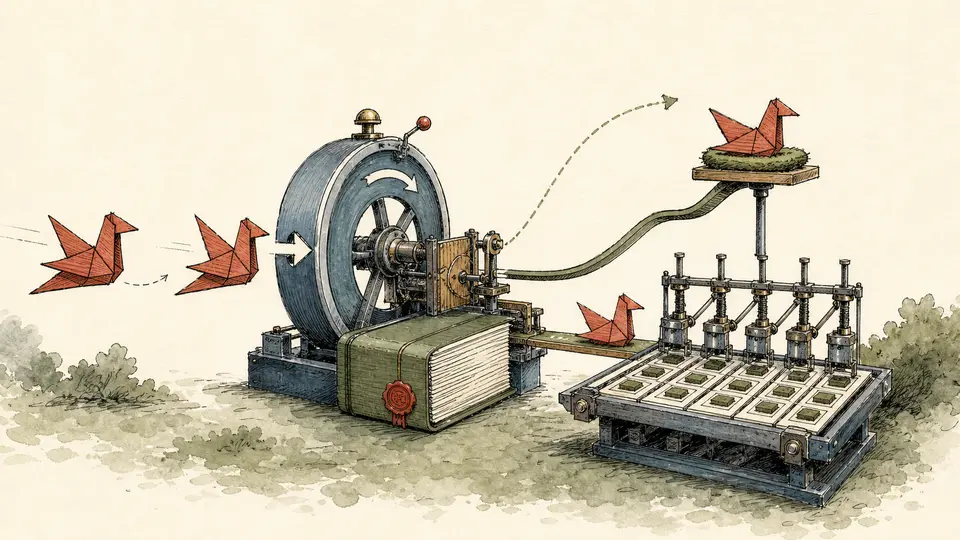
Verify the content MAC before accepting the ping. Respond quickly with the expected empty success response. Fetch payloads server-side, advance the cursor only after durable processing, and treat an old transaction number as a cached result. If the sequence jumps, hold the write path until the missing payloads are reconciled.
The webhook API has its own lifecycle too. Current Airtable documentation says token-created webhooks expire after seven days unless refreshed through the documented operations. Notification delivery retries can eventually stop and disable notifications while payload generation continues. A production runbook therefore needs renewal, disabled-notification detection, and catch-up—not just a callback URL.
Approve the digest, not the prompt
The operator should review a rendered mutation artifact: old and new values, destination IDs, record count, sensitive fields, merge-key policy, downstream automations, and rollback owner. Hash the canonical outgoing request. Bind the approval to that digest, an expiry, the reviewer identity, and one idempotency key.
Any drift invalidates review. A table switch, an added record, a changed field value, enabled typecasting, a new merge key, or a different method all require a new preview. Approval for “finish the sync” must never survive those changes.
OpenClaw's tool system helps by showing only the typed adapter to this agent. Host exec approvals solve a different boundary: they bind command execution context and can stop drifted host commands. They are not a substitute for the Airtable request digest. Keep the platform guardrail and the application-side write contract separate.
Roll out from a disposable base
Start with a copied base containing synthetic rows and the real field types. Give the PAT only the necessary read/write scopes and only that base resource. Disable any Airtable automations that would send mail, create external tickets, or call other systems. Then run the same fixture mutations through the actual adapter.
- Prove a read-only list with explicit fields, pagination, and a maximum record count.
- Preview one PATCH and reject one PUT.
- Prove a ten-record batch and reject an eleven-record batch.
- Test a stable upsert key, a duplicate key, and a missing key.
- Lose the response intentionally and verify readback plus cached-receipt recovery.
- Replay a webhook transaction and skip one transaction to exercise both paths.
- Change a field after review and require a fresh approval digest.
Only then bind the production base and table IDs. Begin with one reversible field whose owner can inspect every change. Increase scope by field and operation, not by prompt ambition. Delete permission should remain a separate adapter and review class.
The claim boundary remains narrow
This article does not claim a live Airtable integration was deployed or that any base was improved. No token, account, request, webhook, model call, personal data, customer record, or external side effect was used. The retained test proves only that the local admission function returned the expected decision for 40 synthetic packets.
It also does not preserve the legacy article's time savings, monthly costs, ROI, conversion impact, or “four workflows that ship” claims. Those figures had no body-bound evidence. The replacement is less theatrical and more useful: a write boundary that can be inspected before one real row changes.
Sources
- Airtable Support — Creating personal access tokens: scopes, resources, inherited user permissions, and API-key deprecation.
- Airtable Web API — Update multiple records: PATCH/PUT semantics, upserts, merge fields, typecasting, roles, and response shape.
- Airtable Web API — List records: table IDs, pagination, explicit fields, filtering, and iterator behavior.
- Airtable Support — Managing API call limits: per-base and token limits, 429 recovery, batching, upsert, Sync API, and caching.
- Airtable Web API — Webhooks overview: server-side tokens, content MAC, at-least-once pings, transaction numbers, retries, and expiry.
- OpenClaw Tools overview: typed tools, policy visibility, skills, plugins, and capability boundaries.