2026-06-18
Automate Customer Support with OpenClaw: Keep Replies Draft-Only
Use signed support events, evidence-bound review packets, collision guards, and exact delivery receipts before an OpenClaw workflow can promise anything to a customer.
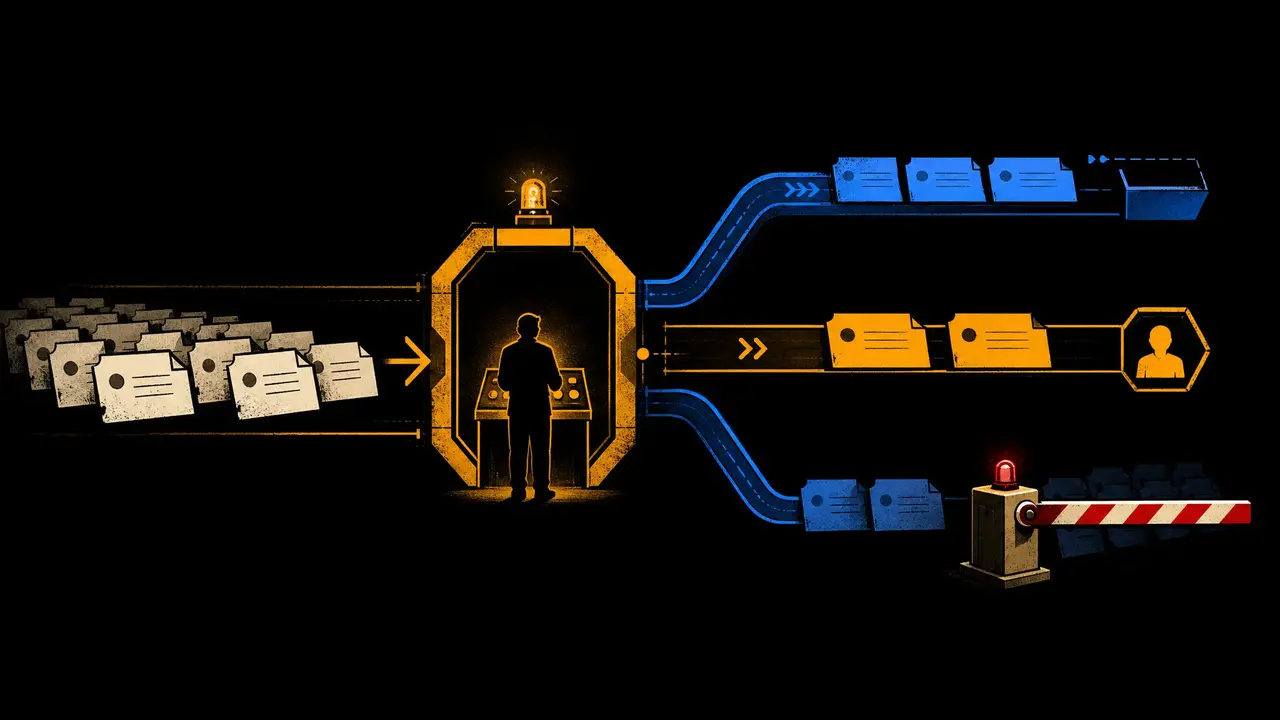
A customer-support agent does not become dangerous when it writes an awkward sentence. It becomes dangerous when a plausible sentence lands in the wrong conversation, uses a policy that changed yesterday, or silently turns a refund request into a public promise. The text may look fine while the operation is wrong.
That changes the sensible way to automate customer support with OpenClaw. The first useful deployment is not an autonomous helpdesk representative. It is a control desk that authenticates inbound work, assembles evidence, proposes a disposition, and leaves customer-visible delivery outside its authority. Routing and drafting can become fast before sending becomes automatic.
This recommendation comes from comparing the current OpenClaw permission model with Zendesk and Intercom's API contracts, then running a deterministic twelve-case boundary probe. The probe is deliberately not a claim about model accuracy. It asks a narrower engineering question: which ticket classes may enter a draft lane, and which must stop before any irreversible write?
The decision: automate the packet, not the promise
Use OpenClaw to build a review packet for each new support event. Keep the helpdesk as the system of record. Give the agent read access to the conversation, approved knowledge, account facts, and status data. Let it propose classification, urgency, queue, a grounded draft, and the reason for escalation. Do not give the same runtime a reusable credential that can publish a customer comment.
That boundary matters because the APIs expose distinct operations. Zendesk separates the agent-facing Tickets API from the end-user-facing Requests API. A ticket can carry assignment, priority, private notes, and public comments; those are not equivalent writes. Intercom's conversation endpoint likewise distinguishes comments from internal notes. Its documentation also warns that a bot reply recorded on an inbound email conversation may be an unnotifiable comment rather than a delivered email. “The API accepted it” is therefore not a delivery receipt.
| Operation | Useful agent output | Authority in the first rollout |
|---|---|---|
| Observe | Normalize the event, conversation, account, and current policy version | Read-only agent access |
| Propose | Category, urgency, queue, evidence links, and draft reply | Local artifact or private review note |
| Route | Assign a bounded queue or add a non-public tag | Deterministic adapter after validation |
| Promise | Public reply, refund, account change, deletion, or commitment | Human-approved sender with separate credentials |
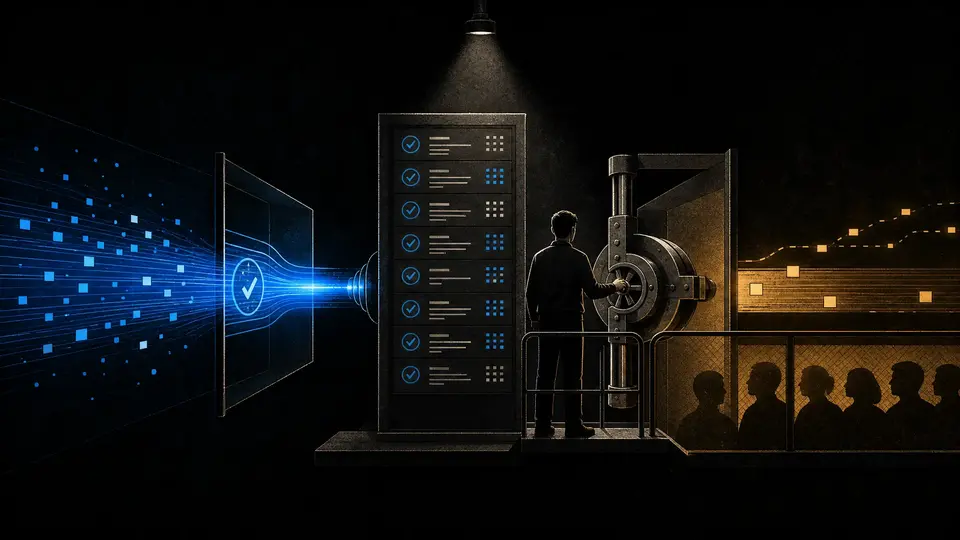
Ingress and egress are different trust boundaries
Zendesk webhooks can notify an integration when a ticket is created or changed, and signed requests let the receiver verify their origin. That solves an ingress problem. It does not decide whether the payload is complete, whether an old event is being replayed, whether the ticket changed during processing, or whether a public answer is authorized.
OpenClaw provides a useful second layer. External events can wake work through the Gateway, while permission modes constrain host execution with deny, allowlist, ask, auto, or full. But host-command policy is not a substitute for helpdesk credential design. If an integration token can add public comments, a perfectly restrictive shell policy does not remove that API capability.
A production adapter should therefore verify the webhook signature, derive a stable event key, fetch the current ticket from the helpdesk, and hand OpenClaw a reduced packet rather than the raw provider payload. The adapter owns provider authentication. The agent sees only the fields needed for classification and drafting. Customer text remains evidence; it never becomes permission to change tools, reveal secrets, widen recipients, or approve its own reply.
The packet must be reviewable without reopening the whole ticket
A reviewer should be able to decide from one compact record. A prose draft on its own hides the facts that produced it. The packet below makes the disputed parts explicit:
{
  "ticketId": "zd_18427",
  "eventId": "ticket.updated:18427:1709",
  "observedVersion": "2026-07-22T15:41:09Z",
  "proposedQueue": "billing-review",
  "risk": ["financial"],
  "evidence": [
    {"kind": "invoice", "id": "inv_8821", "version": "7"},
    {"kind": "policy", "id": "refund-policy", "version": "2026-07-01"}
  ],
  "draft": "…",
  "customerVisible": false,
  "requiredReviewer": "billing-agent"
}
The identifiers are not decoration. The ticket version prevents a stale draft from overwriting a newer human response. Zendesk documents collision protection through safe_update and updated_stamp; the same principle applies even when another helpdesk uses a different field. The evidence versions make a draft reproducible. The event ID makes a retry distinguishable from a second customer request.
Review should approve the exact packet digest, not the general idea of “answering ticket 18427.” If the conversation, policy, recipients, attachments, or proposed body changes, the approval expires. The sender then performs one narrow action and records the provider response, resulting comment ID, visibility, and delivery state.
What the twelve cases exposed
The boundary probe covered routine password and invoice questions, a partial knowledge-base match, an unknown integration, an outage report, a security disclosure, a legal threat, a refund, account deletion, a high-value churn signal, a duplicate-ticket merge, and a stale metadata write.
Only two cases entered the grounded draft lane. One produced a clarification request. Eight went to a human because evidence was missing, risk was high, or the proposed operation changed customer or account state. The stale write became a conflict rather than a retry. Across all twelve, the policy produced no customer-visible send and no irreversible write.
Those counts are not a benchmark and should not be marketed as one. They demonstrate that the boundary is testable. A team can add its own real historical cases, encode expected dispositions before running the agent, and inspect disagreements. The most valuable failures are not stylistic. They are a missed escalation, an unsupported citation, a stale version, an extra recipient, or a public/private visibility mismatch.
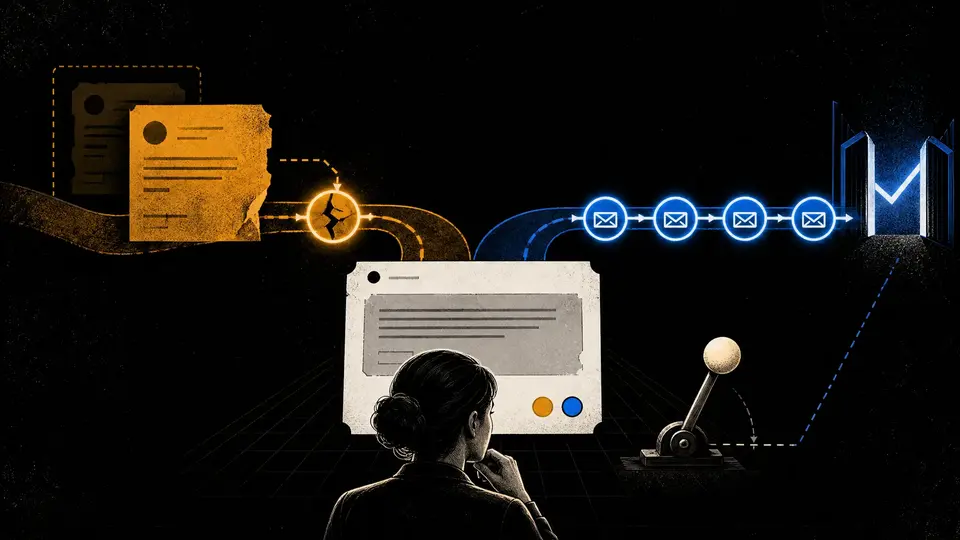
Failure modes: a timeout is an unknown outcome
Support systems are especially vulnerable to cheerful duplicate replies. The adapter sends a request, the connection times out, and the workflow repeats because it never saw success. The customer then receives two messages—or a human answers between attempts and the second automated response contradicts them.
Before retrying, fetch the current conversation and look for the exact operation fingerprint or returned comment ID. Compare the observed ticket version with the version in the approved packet. If either moved, stop and rebuild the review record. Intercom's distinction between a stored bot comment and an actually delivered email adds one more requirement: record provider-specific delivery state rather than inferring it from object creation.
This is also why queue updates should be small. A deterministic routing adapter can set an approved queue and tags without publishing prose. It should use the provider's collision guard where available and refuse to “force” an update after a conflict. A human response is not an obstacle to automation; it is newer truth.
Measure corrections before deflection
A ticket-count graph rewards the wrong behavior early. Closing more cases says nothing about whether customers had to reopen them. The first dashboard should make the human corrections visible:
- Routing correction rate: how often a reviewer changes category, priority, or queue.
- Evidence coverage: the share of factual claims linked to a current policy, account record, incident, or product document.
- Draft acceptance: accepted unchanged, accepted after material edit, or rejected—not one blended “used” metric.
- Missed escalation rate: security, legal, privacy, financial, outage, or churn cases that entered a routine lane.
- Conflict and replay rate: stale versions, duplicate events, and unknown outcomes found before a second write.
- Customer re-contact: tickets reopened or repeated because the first response did not resolve the issue.
These measures reveal whether the packet is becoming trustworthy. Only after real reviewed traffic shows stable routing, strong evidence coverage, and near-zero missed escalations should the team consider a narrow customer-visible lane. Even then, start with a reversible, low-risk class whose answer comes from one current source and whose delivery can be reconciled.
The rollout has four stop lines
Shadow queue: OpenClaw reads mirrored events and produces packets that nobody acts on. Compare the proposed queue and evidence with the human outcome. Stop if event identity, ticket freshness, or knowledge versions cannot be reproduced.
Reviewed drafts: place the packet where an agent can accept, edit, or reject it. Keep the send button in the helpdesk and keep the OpenClaw runtime unable to reach it. Stop if reviewers cannot see why a claim was made.
Bounded metadata writes: allow a small adapter to set an approved queue or non-public tag using collision protection. It receives typed fields, not an arbitrary tool request. Stop on any version mismatch or scope expansion.
Customer-visible delivery: treat this as a separate project with separate credentials, exact-payload approval, idempotency, delivery receipts, rollback expectations, and an owner for provider-specific failure states. A broad “support agent” token is not a mature version of the draft lane; it is a different risk class.
Where OpenClaw earns its place
OpenClaw is valuable here because support work crosses channels, schedules, tools, and human review. It can wake on an authenticated event, gather bounded context, run a repeatable analysis, preserve a session when investigation takes time, and deliver a review packet to the right operator. Its permission modes help keep host actions narrow.
The durable design choice sits outside the prose model: the agent cannot make a public promise with the same authority it uses to inspect evidence. Build that absence of authority first. Better drafts will improve the queue. A locked send path keeps one confident mistake from becoming the customer's problem.