2026-06-18
Automate LinkedIn with OpenClaw: Build the Queue, Not the Bot
A 50-case admission drill separates owner-provided research, local drafts, manual outreach, and permissioned post publishing without website automation.
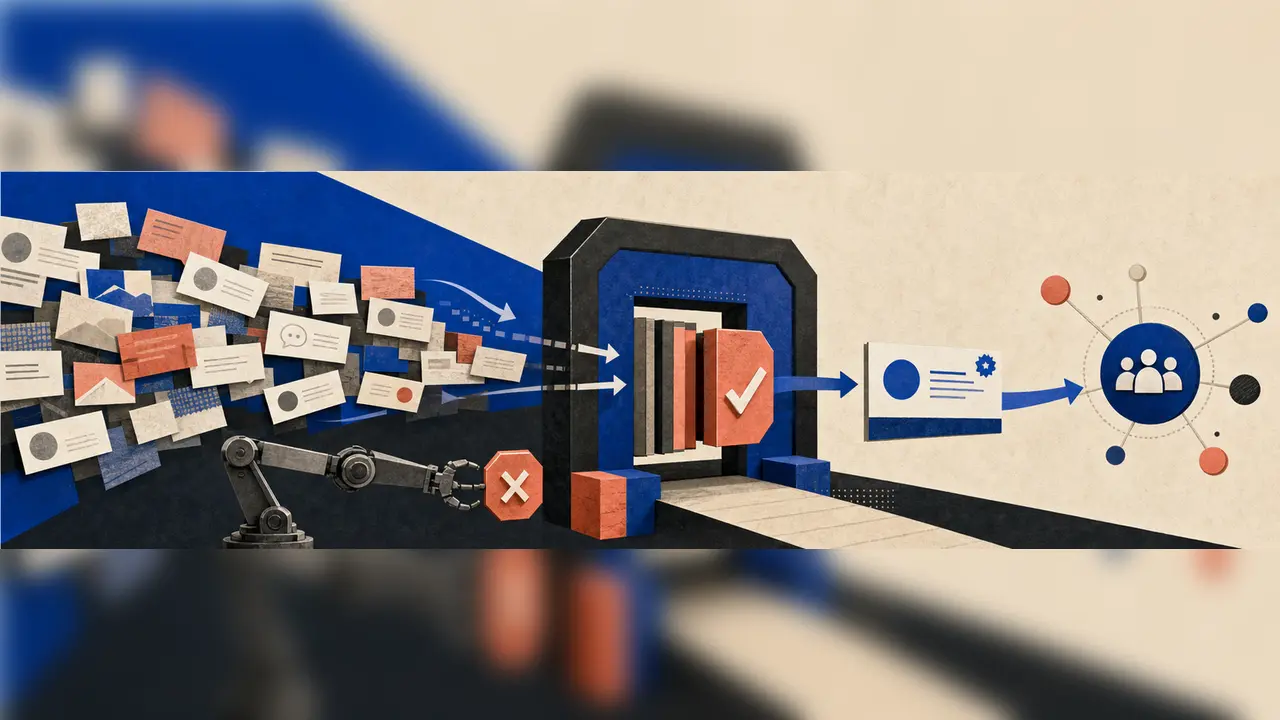
Automate LinkedIn with OpenClaw by building the queue, not the bot. The useful work happens before a person opens LinkedIn: reconcile owner-provided account notes, verify a claim, draft one post or message, show the provenance, and wait. The dangerous shortcut is letting a browser worker scrape profiles or press buttons on the site. LinkedIn’s current help page says third-party software and browser extensions may not scrape, change the site, or automate activity on it. That boundary is much narrower than the old promise of four unattended sales workflows.
We replaced that promise with a 50-case admission drill. It distinguishes local research, local drafts, manual outreach, and permissioned API publishing. Every case is synthetic: no LinkedIn account, token, browser session, message, post, personal data, or remote request was involved. The result was 50 of 50 expected decisions across 45 distinct outcomes. Six packets were ready for research or drafting, two exact post packets were eligible for an official API, one waited for review, one returned a cached receipt, and 40 were blocked or held.
The claim that should make an operator nervous
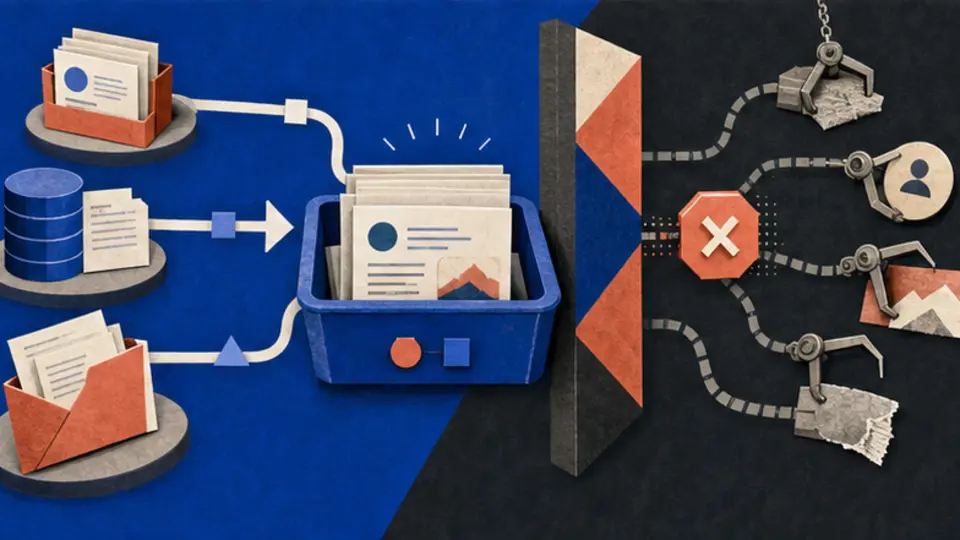
“LinkedIn automation” is usually described as one integration. It is at least four different risk classes. A worker can organize records the account owner already holds. It can prepare language without contacting anyone. It can publish through an official API when the application, member, scope, author, and endpoint all match. Or it can impersonate a person inside the website. Only the last option needs no API permission, which is exactly why it is tempting and exactly why it should not exist in the tool policy.
The platform documentation makes the split concrete. LinkedIn’s three-legged OAuth flow asks a member to consent to explicit scopes. The current Posts API requires versioned headers and author-specific permissions. w_member_social covers posting for the authenticated member. w_organization_social covers organization activity and is constrained by page roles. Read access can be more restricted still. None of those permissions is a general license to automate connection requests, messages, profile collection, or the LinkedIn website.
The operation map fits on one page
Research from owner-held records, content drafting, manual outreach preparation, and official post publishing are separate rows in the map. Each row names its source, actor, credential, side effect, review state, and receipt. A request that cannot name all six belongs in the local queue.
Fifty cases expose forty-five possible decisions
The fixture binds an operation to five things: source provenance, account authorization, content evidence, execution mode, and replay state. A review is a digest of those exact fields, not a reusable “approve LinkedIn” switch. Mutating the operation, author, scope, audience, source count, or execution path after review produces a different digest and blocks the packet.
| Packet | Required evidence | Admitted result |
|---|---|---|
| Research note | Owner consent; CRM export, member export, or user-supplied source; provenance and retention bound | Local note only |
| Connection or message draft | One target; verified claim; voice approval; human click required | Manual outreach draft |
| Member post | Official endpoint; approved product; w_member_social; matching member; current review | One API write packet |
| Organization post | Official endpoint; w_organization_social; matching organization; eligible page role | One API write packet |
| Website automation | Browser session or extension that clicks LinkedIn | Blocked |
| Profile scraping | Automated collection from the website | Blocked |
The deliberately boring cases matter most. An expired token blocks before a write. Empty member or application quota holds instead of retrying. A bulk target count blocks even when the prose is valid. A completed idempotency key returns the prior receipt. An uncertain delivery goes to reconciliation rather than a second publish. These decisions make the system auditable; a clever prompt cannot substitute for them.
Three lanes refuse to impersonate one connector
A defensible OpenClaw design exposes three adapters with different credentials and side effects.
- Evidence adapter: reads only data the owner supplied or legitimately exported. It normalizes records, records provenance, and expires the local cache. It has no LinkedIn session and cannot contact anyone.
- Draft adapter: turns a bounded evidence packet into a post, reply, connection note, or CRM summary. It writes to a review queue. It has no publishing credential and no browser tool for LinkedIn.
- Post adapter: is optional. It holds an OAuth token for an approved LinkedIn product, accepts one review-bound post packet, verifies scope and author, calls the official endpoint once, and records the returned post identifier.
Connection notes and direct messages stop in lane two. A person reads the evidence, fixes the language, decides whether contact is appropriate, and acts in LinkedIn. This is not a cosmetic “human in the loop.” Removing the outreach capability from the worker is what makes the boundary enforceable.
{
  "operation": "draft_connection_note",
  "source": {"kind": "crm_export", "ownerConsent": true},
  "content": {"targetCount": 1, "claimsVerified": true},
  "execution": {"mode": "local_draft", "requiresHumanClick": true},
  "review": {"status": "pending", "digest": "sha256:..."}
}
Research earns its place when it ends in a correction
The safest first rollout is not automated prospecting. It is a correction queue for records the team already owns. The worker can flag a missing title, inconsistent company domain, stale note, or unsupported personalization claim. The reviewer sees the source beside the proposed correction. Nothing is copied from a live profile by an automated browser, and the local cache has a short retention window.
This design changes the success metric. Do not reward the system for the number of profiles “enriched.” Track how many proposed facts were accepted, corrected, rejected, or left unsupported. A high correction rate is evidence that the source mapping or confidence rule is weak. Lower the automation boundary rather than turning up the volume.
Outreach stops at a draft
A connection note is a consequential action even when its text is only a few lines. Bind it to one person, the exact source fragments used, the intended account owner, and a review expiry. The queue should make omissions obvious: no source, invented familiarity, sensitive data, stale job information, or a generic claim that could be pasted onto any profile.
The reviewer must be able to edit or reject without teaching the worker to send. This avoids a common architectural leak: the review UI calls the same broad automation function that generated the draft. Instead, approval changes the local packet to manual_ready. The only output is copyable text plus a source trail. The account owner remains the actor on LinkedIn.
The token is not the policy
An access token answers whether the application received a scope from a consenting member. It does not decide whether this claim is supported, whether this audience is appropriate, whether the author matches the reviewed packet, or whether the same post already succeeded. Keep those decisions in the admission layer, where they can be tested without a network call.
The publishing gate binds author, scope, quota, and replay
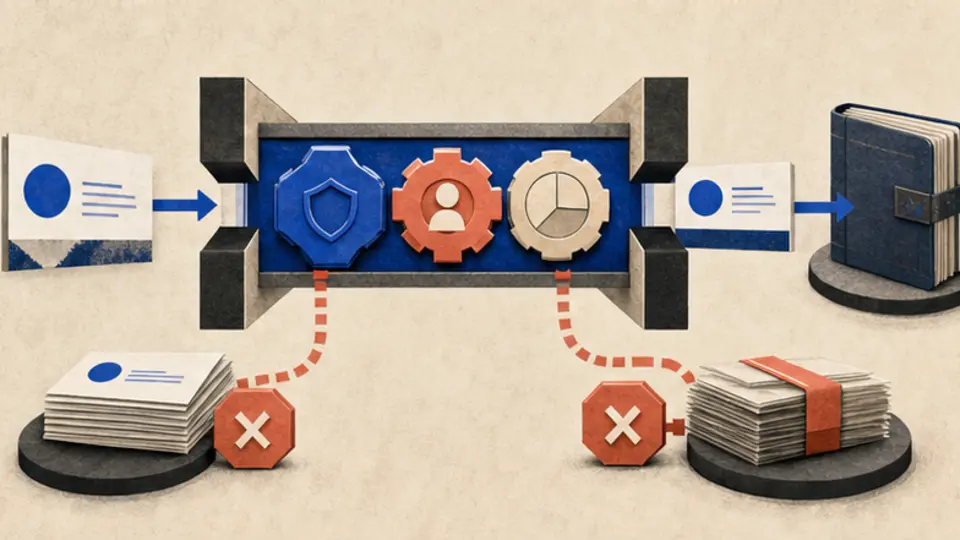
Posting is the one surface where LinkedIn documents a supported write path for eligible applications. The current Posts API uses POST https://api.linkedin.com/rest/posts, a Linkedin-Version header in YYYYMM form, and X-Restli-Protocol-Version: 2.0.0. The authenticated member must be authorized for the stated author. Organization publishing additionally depends on an eligible page role. Media posts require their own upload flow before the post is created.
Rate limiting is not a fixed number to paste into configuration. LinkedIn says limits apply at application and member level, reset daily at midnight UTC, and vary by endpoint. Assigned limits are visible in the application’s Developer Portal after use; a 429 means stop. The worker should preserve the reviewed packet, wait, and reconcile the ledger before trying again. It should never fall back from an API failure to browser clicking.
A review queue is still production software
Queue rows need owners, expiry, immutable source references, edit history, and a terminal disposition. A rejected draft should not reappear after the next scheduler tick. A corrected draft needs a new digest. An abandoned source cache should expire even if no reviewer ever opens the row. These are ordinary lifecycle requirements, not model behavior.
The replay ledger closes OAuth's blind spot
OAuth proves authorization; it does not prove that a retry is new. Store an application-owned idempotency key before the request. Move it through review_pending, in_progress, complete, or uncertain. On success, retain the returned post identifier.
Permission does not answer the replay question
On timeout, look for the existing result or hold for an operator. Only a proven absence may create a new attempt. A second OAuth-valid request can still be a duplicate; the distinction lives in the application ledger, not in the token.
The tradeoff is more visible state. There are separate adapters, review digests, short-lived source caches, quota observations, and a replay ledger. That is heavier than giving a browser agent a logged-in profile. It is also the difference between an inspectable publishing integration and a bot whose behavior is defined by whatever the page happened to render.
A denied precondition stays denied
A denied scope, mismatched author, expired token, missing page role, empty quota, or 429 is not a signal to try the website. Preserve the reviewed packet and record the failed precondition. Correct the application product, consent, role, version, or quota state; then ask for fresh review if the authorized shape changed. The local draft remains usable even when the publish adapter is unavailable.
A migration can be deliberately uneventful
Start by removing LinkedIn website access from the worker and exporting the existing draft queue. Reclassify every job as evidence, draft, manual outreach, or official post. Jobs that do not fit stay disabled. Introduce the replay ledger before enabling a post credential; then admit one author and one audience. No contact sequence needs to run during that migration.
What the reviewer must still see tomorrow
- The source is owner-supplied or obtained through an approved API product, with consent and a retention window.
- Every personalization claim points to a retained source fragment; unsupported familiarity is removed.
- The packet names one operation, one target, one actor, and one execution mode.
- Outreach packets end as local drafts and explicitly require the account owner's click.
- Post packets bind product access, scope, author, audience, version headers, quota observation, review digest, and replay key.
- Failure preserves the packet for correction or reconciliation; it never enables a browser fallback.
The useful end state is deliberately modest
An operator opens a short queue containing better evidence, fewer unsupported claims, and one proposed action at a time. Most rows end with copyable text. A small subset may become an official post after exact authorization and review. Nothing collects profiles or drives the LinkedIn website in the background.
What changed from the old article
The previous version promised four workflows, specific weekly hours, conversion lifts, costs, ROI, a two-week rollout, and a complete LinkedIn-to-CRM pipeline. Those figures were not tied to retained measurements and have been removed. It also mixed Sales Navigator, data vendors, browser behavior, messages, notifications, Slack, CRM writes, post scheduling, and undocumented OpenClaw YAML into one happy path.
The replacement makes a smaller claim that can be tested: OpenClaw can organize owner-provided evidence, draft bounded content, and—where an approved LinkedIn API product exists—prepare one permissioned post call. Scraping and website automation remain outside the worker. Outreach remains a manual act. Fifty synthetic cases document where each packet stops.