2026-07-20
OpenClaw Channels: Setup, Security, and Troubleshooting
Set up OpenClaw channels with account-scoped routing, DM and group policy, live probes, capability checks, and safe dead-letter recovery.
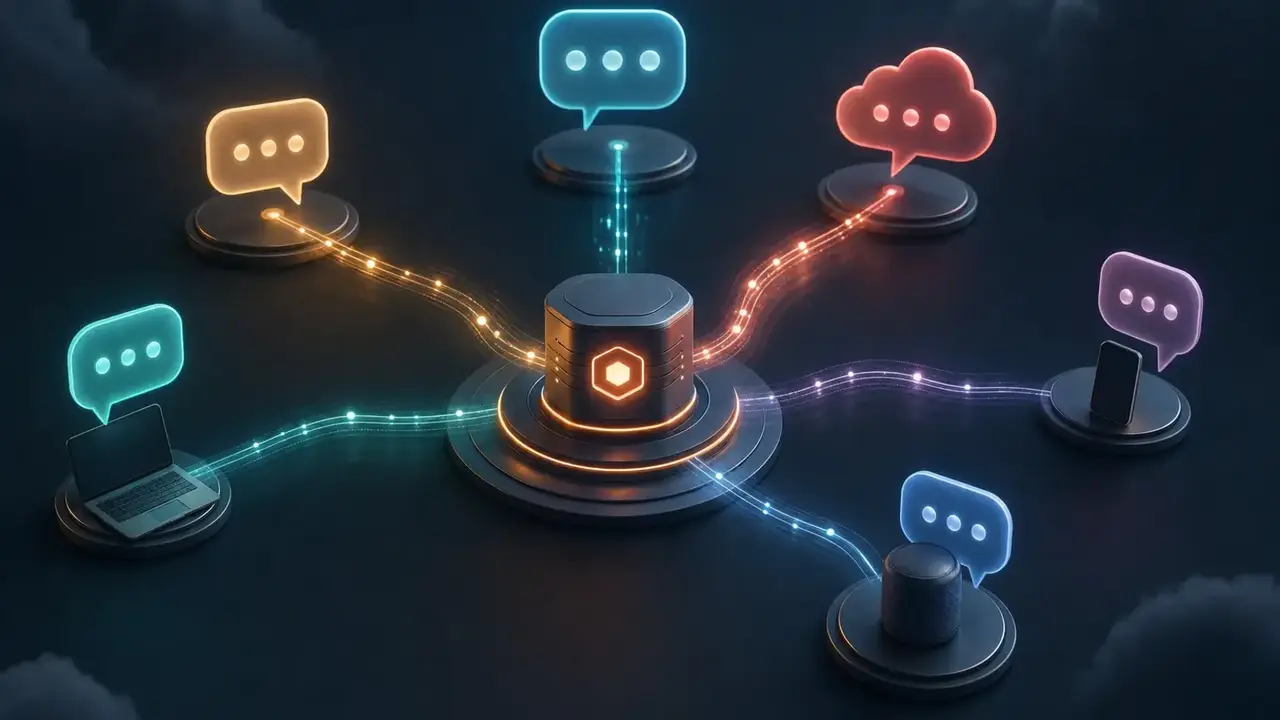
The Telegram account on this OpenClaw host passed a fresh live provider probe in 39 ms, was connected over polling, and had no recorded transport error. The same status document reported one unresolved group audit entry and a wildcard posture that allows unmentioned group traffic. Meanwhile, openclaw agents bindings --json returned an empty array because the only configured agent is also the default. None of those facts contradicts another. They describe different layers of the channel path.
That is the useful way to operate OpenClaw channels: treat inventory, transport, routing, admission policy, capabilities, and delivery as separate contracts. “Connected” is evidence about the provider socket. It is not proof that the intended sender can trigger the intended agent, that an unmentioned group message should become a request, or that a reply can perform every action your workflow expects.
Connected is not governed.
The 23 July 2026 repeat used OpenClaw 2026.7.1-2 and stayed read-only. Configuration validation passed with no warnings; the event loop was not degraded; the channel status, capability report, agent inventory, and binding inventory described the same boundary. No token, policy, binding, account, session, retained event, or external system was changed.
Validation starts with transport, not ends with it
The live Telegram record was strong transport evidence: configured, enabled, running, connected, no last error, no pending restart, zero reconnect attempts, and a successful provider identity probe. Recent inbound and outbound timestamps also showed that this was not a dormant configuration summary.
But the same JSON still could not answer four operational questions by itself:
- Which agent owns this account when more than one agent exists?
- Which direct-message senders and groups are admitted?
- Does an unmentioned group message become a request, quiet context, or a dropped event?
- Can the account perform the specific action the workflow needs in the exact destination?
A channel acceptance test must resolve those questions explicitly. Otherwise a healthy transport can deliver the wrong conversation to an implicit default, admit more context than intended, or pass text while failing media, reactions, polls, threads, or room permissions.
Inventory distinguishes possible from active
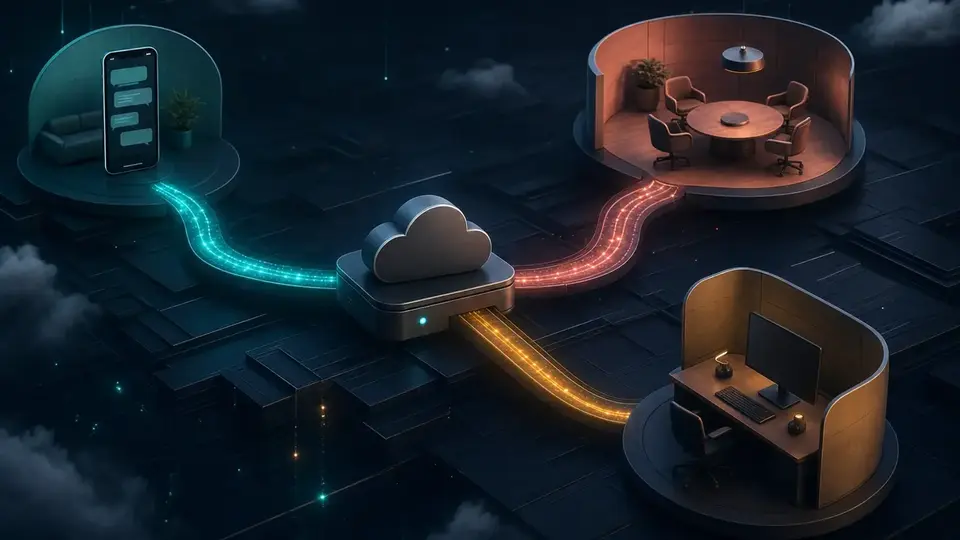
openclaw channels list --all --json reported the configured chat channels first, then a much larger catalog of installable providers. The distinction matters. An installable catalog entry is not an installed plugin; an installed plugin is not a configured account; a configured account is not necessarily enabled or running.
The default list is intentionally narrower: it focuses on configured chat accounts. Add --all when planning a provider choice or investigating why a channel name appears in documentation but not in the running inventory. Do not use that expanded catalog as a readiness report.
| Evidence | What it proves | What remains unknown |
|---|---|---|
list --all | Installed, configured, and catalog visibility | Socket state, sender admission, and delivery |
status --probe | Gateway runtime state plus provider probe/audit where supported | Correct agent selection and end-to-end user outcome |
agents bindings | Explicit channel/account routing rules | Provider health and group admission |
capabilities | Static features plus provider-specific probe details | That every feature works in the chosen destination |
| Harmless canary | One complete inbound and outbound path | Other senders, rooms, actions, and failure recovery |
Provider credentials are also separate from model-provider credentials. Messaging accounts belong under openclaw channels; model authentication belongs under the model surfaces. Replacing a model key cannot repair a dead Telegram bot token, and opening a DM policy cannot repair an unreachable provider.
Live status is a transport receipt
openclaw channels status --probe --jsonOn a reachable Gateway, --probe asks each account plugin for a live probe and, where available, an audit. The current Telegram account returned a provider identity, polling mode, a successful probe, and account-level connection state. The event-loop section was not degraded, with a low measured delay during the capture.
If the Gateway is unreachable, the command can fall back to configuration-only summaries. That fallback is helpful during an outage, but it must not be labeled a live provider check. Preserve whether the result came from the running Gateway or local configuration; the JSON can look authoritative in both cases.
Stored sessions are an even weaker transport signal. Session rows prove that conversation state exists. They do not prove that Discord, Telegram, Slack, or another adapter is connected now. The official CLI contract calls this out because a quiet but healthy account may have no recent session until another event arrives.
Ownership can remain implicit while the socket is green
The inspected host has one agent, main, marked as the default. Its binding count was zero, and openclaw agents bindings --json returned no explicit rules. In that single-agent topology, the default route is enough for messages to reach the only agent. An empty binding array therefore does not mean “messages go nowhere.”
It does mean the ownership contract is implicit. That becomes fragile when a second agent, a second provider account, or a dedicated support bot appears. Interactive channels add can create account-scoped bindings; non-interactive channel setup does not invent them. Before expanding the topology, record the intended owner and add the narrow channel-plus-account binding deliberately.
openclaw agents list --json
openclaw agents bindings --json
Read the two outputs together. A binding is a routing rule, not a transport probe. A provider account may be perfectly connected while its event is routed by a broader default than the operator expected.
Implicit routing is still routing; it is simply harder to audit.
The unresolved group is policy debt
The Telegram audit returned ok: true, zero checked groups, one unresolved group, and a wildcard that allows unmentioned groups. That combination deserves review even though the provider probe passed. It says the runtime could not turn the configured group posture into a complete, enumerated audit of exact rooms.
Policy needs an owner.
OpenClaw group handling has three distinct gates:
- Admission:
groupPolicy, room maps, and sender allowlists decide whether the message is allowed. - Activation:
requireMentiondecides whether an allowed group message directly asks the agent to work. - Context visibility:
contextVisibilitydecides which quoted, forwarded, or historical snippets can enter model context.
Those gates are not substitutes for each other. Mention gating reduces unsolicited replies; it does not narrow who can trigger commands after mentioning the bot. A sender allowlist limits triggers; it does not automatically remove untrusted quoted text from context. A group wildcard reduces configuration work; it also makes the audit dependent on a broad rule instead of exact room identities.

Capability output is an upper bound
The live Telegram capability output advertised direct, group, channel, and thread chat types; media, reactions, polls, native commands, and block streaming; plus actions including send, broadcast, poll, react, delete, edit, and topic management. It also returned the current provider flags in a successful probe.
That is a useful compatibility map, but it does not prove that a particular bot may perform every action in a particular chat. Some provider probes can inspect scopes, intents, or destination permissions; others combine static plugin support with account information. Treat the report as the upper bound, then exercise the exact action in a harmless destination.
This matters most when text already works. A workflow can deliver plain replies and still fail on attachment limits, thread creation, reaction permissions, webhook mode, voice permissions, or room history access. The narrower canary reveals which capability matters without turning a broad “send something” test into production noise.
One destination needs one acceptance record
A channel rollout does not need a giant checklist. It needs six durable records tied to one account and one destination:
- The inventory record: channel, account ID, installed/configured/enabled state.
- The live probe: running/connected state, provider result, audit result, and capture time.
- The routing record: default-agent reasoning or an explicit channel/account binding.
- The policy record: DM admission, group admission, mention behavior, and context visibility.
- The capability record: the exact feature required by the workflow.
- The canary record: one approved inbound marker and one visible outbound result in the source conversation.
For a shared room, add the session and tool posture. Group sessions use non-main keys, and Telegram forum topics add a topic segment. That separation can support sandboxing and narrower tools, but only if the configured sandbox and tool policy actually differ from the main session.
A bot replying once is not the same as a governed channel. The acceptance record should explain why that sender, room, agent, context, and action were allowed.
Failure modes reveal the first broken boundary
When a connected bot stays silent, start with the observed boundary rather than changing several settings at once.
| Observation | Likely boundary | Next evidence |
|---|---|---|
| Configured account, failed live probe | Credential, network, webhook, plugin, or provider | Gateway-context status and channel logs |
| Probe passes, DM ignored | Pairing or DM allowlist | Pairing state and exact sender ID |
| DM works, group ignored | Room allowlist, group sender policy, mention gate, or provider privacy mode | Exact group config and one mentioned canary |
| Inbound accepted, wrong agent responds | Binding specificity or default route | Agent list and binding inventory |
| Text works, richer action fails | Capability, scope, intent, or destination permission | Capability probe plus one exact action test |
| Event failed after repeated processing | Ingress handler or downstream operation | Retained dead-letter reason and event identity |
Do not open a sender policy to compensate for a bad token, and do not rotate credentials to compensate for mention gating. Both changes can make the next observation harder to interpret while expanding the blast radius.
Recovery starts from the retained event
Inbound events that exhaust their retry policy can remain in the Gateway's shared state database. The JSON dead-letter view includes retained payload and metadata, so it belongs in a restricted incident artifact. Inspect it on the same Gateway host and account that owns the queue.
openclaw channels dead-letters list \
  --channel telegram \
  --account default \
  --json
After fixing the underlying problem, resubmit the retained event ID rather than reconstructing the message from visible text. OpenClaw preserves the payload, metadata, and lane, resets its attempt state, and atomically replaces the failed marker. Repeating the resubmit while that event is pending or claimed is refused, which protects the queue from a second dispatch. Downstream side effects still need their own idempotency key.
A completed event is terminal, and an older failed row without retained payload cannot be resubmitted. Those boundaries are safer than a general “retry everything” button because they keep recovery tied to one known failure.
This host needs a policy decision, not a restart
The inspected Telegram transport is healthy. There is no evidence-based reason to rotate its token or restart the Gateway. The remediation item is policy clarity: replace or justify the unresolved group wildcard, decide whether unmentioned group traffic should be a request or quiet context, and document why the default-agent route is acceptable while only one agent exists.
Then repeat the live probe and run a harmless canary from the exact approved group. The acceptance result should name the account, route, sender policy, activation rule, context policy, required capability, and visible outcome. That is more informative than forcing every field in status --probe to look green.
The operating principle is simple: prove the transport, then prove the decision the transport is allowed to make. OpenClaw exposes enough separate surfaces to do both. Combining them into one “channel works” label throws away the distinction operators need during incidents.
If your team would rather consume a managed agent than own provider credentials, Gateway listeners, routing rules, group policy, and retained-event recovery on every host, deploy an AI agent on GolemWorkers. The related multi-agent routing guide, security audit, and logging field note cover the layers around a channel.
Evidence refreshed on 23 July 2026
The source refresh reopened the four first-party references below. Every document returned HTTP 200 and still exposed the relevant contract markers: provider and plugin distinctions, configured versus catalog inventory, live probes, capabilities, dead-letter resubmission, group admission, mention activation, context visibility, visible delivery, session placement, logs, scopes, and permissions. The host-side repeat independently confirmed a connected polling transport, a passing account audit with one unresolved wildcard group, a passing capability probe, one default agent, and zero explicit bindings.
- OpenClaw chat channels — included, official-plugin, and external-provider distinctions plus cross-channel delivery behavior.
- OpenClaw channels CLI — inventory semantics, live probing, capabilities, account setup, routing, name resolution, logs, and idempotent dead-letter resubmission.
- OpenClaw groups — group admission, mention activation, visible replies, context visibility, session keys, and isolation patterns.
- Channel troubleshooting — boundary-oriented command ladder and provider-specific failure signatures.